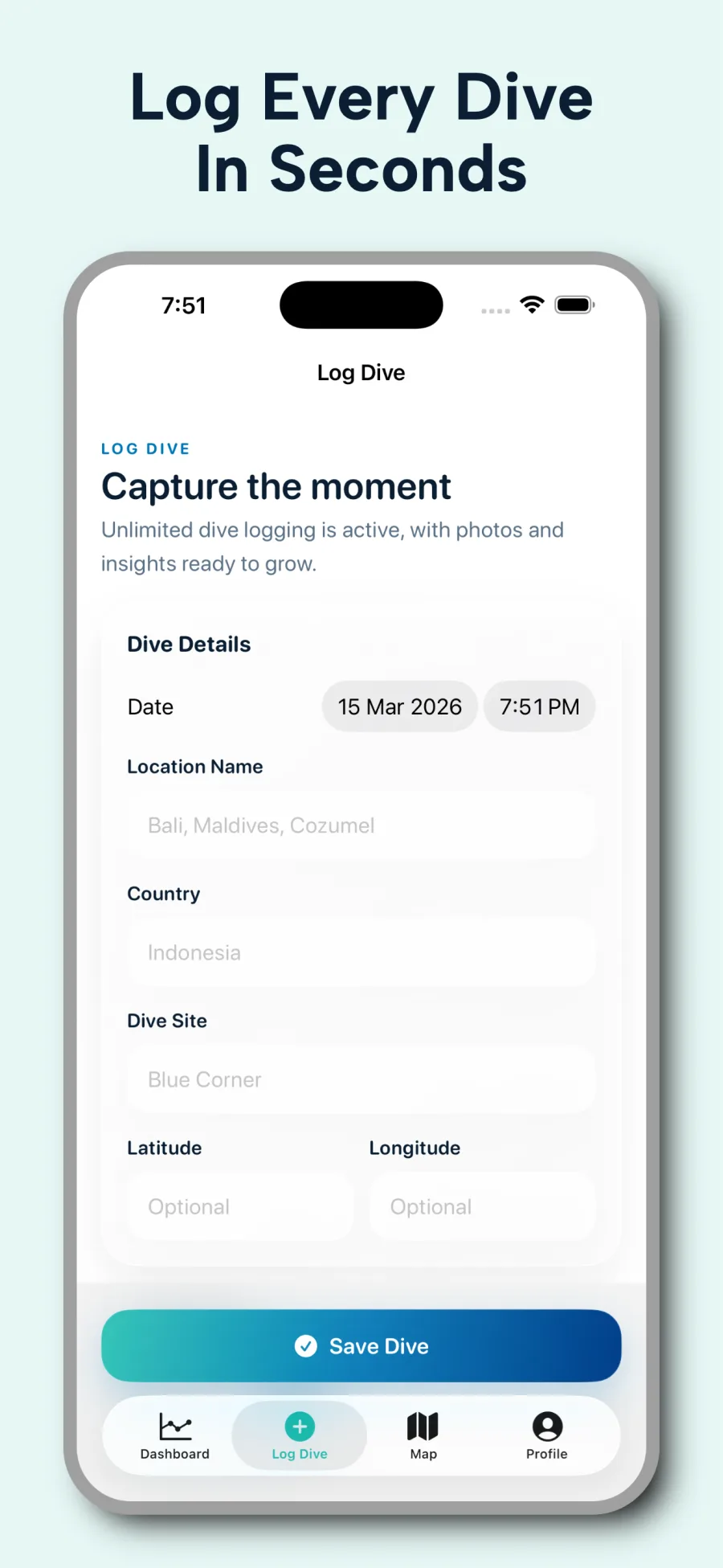
Start with the core record
Site, date, maximum depth, duration, buddy, and a short note cover most recreational dives. If those fields are empty, extra technical fields will not make the history more useful.
Add gas and tank details when the mix or cylinder mattered
Gas type, oxygen percentage, tank volume, and starting and ending pressure are worth logging when you used nitrox, switched gases, or want a record of what the cylinder actually held. They are less useful on a repetitive air dive at a familiar site unless you already track them as habit.
- Gas type and oxygen percentage
- Tank volume
- Starting and ending pressure
- Safety or decompression flags when they applied
What SAC and RMV are in a logbook
Surface Air Consumption (SAC) and Respiratory Minute Volume (RMV) are ways of describing how quickly you used gas, normalized so dives at different depths can be compared. In a logbook they are calculated from the pressures, tank, depth, and time you enter.
That makes them a personal trend, not a clearance to plan the next dive. DiveAtlas can store SAC or RMV on an Advanced Log entry. It does not replace a dive computer, gas-planning software, or training in how those numbers are used.
Keep gear service next to the dives, not in a separate note
If you already track regulator or BCD service dates, putting the name, serial number, and next service date in Diver Utilities is more reliable than a camera roll of receipts. The log still holds the dive; the utility holds the kit calendar.
Leave unused fields blank
A complete-looking form with guessed numbers is worse than a short accurate record. DiveAtlas keeps Advanced Log optional so a boat-day recreational dive can stay short and a technical or training dive can carry the extra detail.